
The situation in 2000
Russia enters the new century still paying for the collapse of 1988. The Chernobyl cover-up cost Moscow Ukraine, Belarus and the whole Eastern Bloc; a decade of defaults, Kaliningrad's secession and two wars in Chechnya followed. Vladimir Putin, acting president since Yeltsin resigned on New Year's Eve 1997 and elected in 1998, promises order - but the army is short of everything and Ichkeria still fights. Gather the lost lands back one by one - compatriots, the gas weapon, little green men and the referendum - as Putin's Power Vertical or Primakov's multipolar Russia, or let the state fall in a new Time of Troubles to Zhirinovsky's empire or Zyuganov's restored Soviet Union, where a Tsar and a waking Lenin wait.
32
26
6
144m
75%
80%
4
119
Resources
Army
48 divisions
- Armoured8
- Mechanised20
- Infantry4
- Airborne5
- Marines3
- Mountain2
- Garrison6
Navy
66 ships
- Carriers1
- Destroyers19
- Frigates7
- Submarines39
Air force
1,900 aircraft
- Fighters1,100
- Close air support300
- Strike aircraft500
The Empire That Chernobyl Broke
Moscow tried to bury Chernobyl - literally. The cover-up, the blackout and the murdered patients turned Ukraine and Belarus into battlefields, and with the army trapped there and in Afghanistan, the Eastern Bloc simply walked away. On 18 March 1988 the Soviet Union collapsed.
Russia inherited its seat at the UN and none of its strength. Kaliningrad seceded, Chechnya declared independence, the defaults came one after another, and two Chechen wars bled the army white. Boris Yeltsin resigned on New Year's Eve 1997; Vladimir Putin has promised to restore order. The war in the Caucasus goes on.
Ideologies and leaders
In power on 1 January 2000: Vladimir Putin (Unity). Every leader below can come to power in TND, through the elections, coups and roads of its focus tree.
Democratic
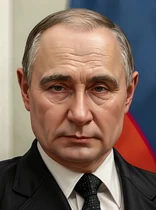 In power, 2000
Vladimir Putin
Putinism
Unity
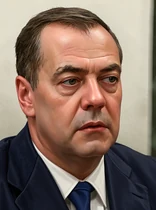
Dmitry Medvedev
Putinism
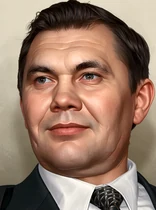
Alexander Lebed
Conservatism
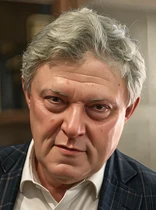
Grigory Yavlinsky
Liberalism
Communist
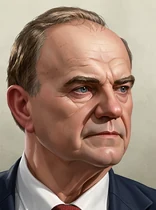
Gennady Zyuganov
Marxist-Leninist
Communist Party of the Russian Federation
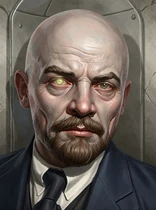
Vladimir Lenin
Leninism
Fascist
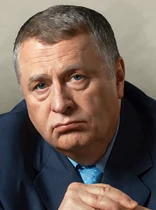
Vladimir Zhirinovsky
Fascism
Liberal Democratic Party of Russia
Non-Aligned
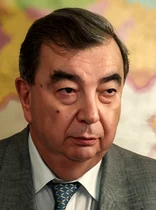
Yevgeny Primakov
Moderatism
Fatherland - All Russia
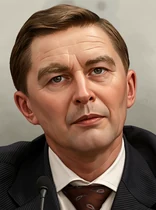
Sergei Ivanov
Oligarchy
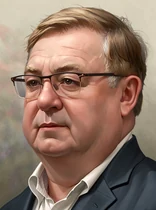
Sergei Stepashin
Moderatism
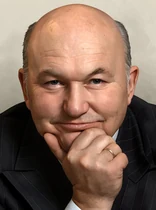
Yuri Luzhkov
Oligarchy
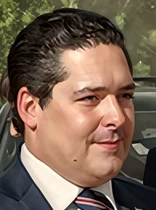
Tsar George I
Absolute Monarchy
The focus tree
Russia's own tree has 967 focuses. It opens with The Gathering of the Lands, Energy Superpower, The Crash Reaches Moscow, The Armed Forces, A Multipolar World, The State at Home and more. By kind: political (461), industry (255), army xp (251), historical (180). Taking every focus, one after another, would take about 83 years - the roads are exclusive, so a playthrough sees only part of it.
Drag to pan, Ctrl + scroll to zoom, click a focus for its description and rewards. Focus names in the guides below jump to it.
Loading the tree...
Path guides
How to reach each of Russia's roads. The same guides are in game, as free decisions in the Russia Path Guide category.
The First Choice and the 2002 Election
How Russia's politics begin:
- The first political focus is a choice: (Putin's first term) or (a new Time of Troubles). Taking one closes the other.
- On , play the first term, then and . No focus is tied to a date.
- Election night is an event: Putin is re-elected, or Yevgeny Primakov wins. Take the winner's first focus.
With historical focuses on, the AI keeps Putin, goes through the Medvedev tandem and back.
The Gathering of the Lands
Russia's signature mechanic:
- Take (shared branch). The decision category of the same name opens.
- Every lost land has four steps, a year apart: Compatriots (political power), (energy leverage), Little Green Men (claims, no war goal) and The Referendum or Union Treaty. Each step raises Russian Provocation (see its own guide).
- The lands: Ukraine's east and Crimea, Belarus, Kaliningrad, Transnistria, Georgia's Abkhazia and South Ossetia, Narva, Latgale, a corridor through Lithuania, northern Kazakhstan.
- Energy Leverage grows each month and with the energy branch. The gas weapon and hybrid war ask Germany and the USA whether to answer with sanctions, a spirit in three tiers. A cut-off leaves its victim in an Energy Crisis (consumer goods up, stability and factory output down) that its Energy Security decisions lift only over months; the gas wars with Kyiv hit Ukraine hard, and the second one every EU member too.
- A referendum is accepted only by a weak land, one at war with us, or one that already gave in to the gas weapon. A land can refuse the result: then we escalate (a war goal, much more Provocation), keep up the pressure (its stability falls and the vote can be held again in a year) or let it lie (a lasting concession).
Russian Provocation and the Demands
How far Russia can push before the West pushes back:
- Russian Provocation runs from 0 to 100 (shown in the Demands and De-escalation decisions). The Gathering's steps, every demand and every war Russia declares raise it; it falls by one a month while Russia is at peace with the lands, and with the de-escalation decisions: a summit with the West, pulling back from the border, an arms control treaty. Every step back is permanent: each one adds to Concessions to the West, a spirit whose penalties (stability, political power, war support, army organisation, military output, nuclear production) never go away, and postponing the Ukraine war does the same.
- At 25 the West sanctions Russia. At 50 it guarantees every land Russia wants: attack one, and Germany, the USA and Britain each decide whether to honour the guarantee or send arms instead. At 75 any Russian war lets the Defence Union or NATO - whichever is closer to the victim - intervene.
- Demands: once a land's track has reached the gas weapon, Russia can demand one state at a time. The land cedes it, refuses, or asks the West, which backs it or makes it give way.
- Russia's focuses never seize land outright: , and the rest send a demand. Refused, they open a decision in Russia's Claims to press the claim - a war goal - a year later.
- The Ukraine War: in 2005-2007, once the Ukraine track has reached the gas weapon, the Ukrainian Crisis demands Crimea and, if Kyiv refuses, can go in for Crimea and the Donbas. A limited war - the West only sends arms. A year later, or at an armistice, the peace is judged on the ground: holding Crimea, Donetsk and Luhansk, Kyiv is sent the Minsk terms - Crimea to Russia and an independent Donbas - and can refuse to recognise the votes; then we choose the whole of Ukraine, annexing anyway (Ukraine keeps its claims, sanctions rise) or withdrawing at a lasting price. Otherwise a white peace.
- Two years after that peace, The Whole of Ukraine can try again - and this time the guarantees and the alliances apply.
The Power Vertical (Putin)
Putin's road:
- Win the 2002 election as Putin and take .
- The Power Vertical at home, the petrostate, the army rebuilt, and the Gathering driven hard: Georgia's war, (needs the Gathering's second step in Ukraine), the Donbas, Belarus, Kaliningrad and the Baltics.
- opens : Medvedev's presidency, then brings Putin back.
The Primakov Doctrine
Primakov's road:
- Win the 2002 election as Primakov and take .
- A multipolar world: the triangle with China and India, the CIS forged into a military bloc, and hard power by coalition.
- At the end he hands over to his chosen heir.
The Time of Troubles: Zhirinovsky or Zyuganov
How the state falls:
- Take as the first focus.
- Work through the unpaid army, the governors and the putsch to . An event decides who takes the Kremlin.
Zhirinovsky (): open conquest - the last dash to the south, the Gathering by war, ending in .
Zyuganov (): the Soviet Union restored - by treaty with Belarus, Kazakhstan, Armenia and Transnistria, then by force - ending in and a new Warsaw Pact.
Hidden: the Romanovs and Lenin
The two hidden roads:
The Romanovs: on Zhirinovsky's road take and accept the crown in the event. replaces the Vozhd's road.
Lenin: on Zyuganov's road take and choose to bring him a newspaper. replaces the Party's road.
The AI never opens either with historical focuses on.
Legacies and National Programmes
Every focus builds up a spirit, by what it is about:
A leader's own focuses build that leader's legacy (Legacy of Vladimir Putin and so on). Every other focus builds The Petrostate, , or The Power Vertical.
The Siloviki State (Ivanov)
How the security services inherit the Kremlin:
- At take instead of : Sergei Ivanov becomes President at the head of Fatherland - All Russia.
- Three lines: the services in every ministry, the oligarchs sold to friends, and the information wall. Each has its own events (, , ).
- needs all three lines. It is a capstone with no election and no successor.
Putin Forever
Putin does not step aside:
- At take : Putin stays President with no tandem and no Prime Minister, at the head of Fatherland - All Russia.
- Three lines: the term limit and the Duma, the party of power, and the national projects. Each has its own events (The Referendum, Lists of Loyalty, ).
- needs all three lines and the end of the term limit.
The Moscow Machine (Luzhkov)
The capital runs the state:
- On Primakov's road, at , take : Yuri Luzhkov becomes President at the head of Fatherland.
- Three lines: Moscow's budget and tenders, Fatherland and the regions, and a standoff with the security services.
- needs all three lines.
The Liberal Turn (Stepashin)
Primakov's heir turns west:
- At take : Sergei Stepashin governs as a democrat at the head of , and the quiet-continuity road is not taken.
- Three lines: a thaw with Washington and the EU (a partnership, not membership), liberal reforms, and the old services' grumbling and the Chechen talks.
- needs all three lines.
The Committee of National Salvation (Lebed)
A coup at :
- In the event Who Takes the Kremlin? choose Lebed. is a junta with no election: a general takes the Kremlin by decree.
- Three lines: the Krasnoyarsk garrison and Siberian oil, the army's hand, and the national salvation with elections promised.
- needs all three lines. Elections come once the capstone is reached.
Democratic Russia (Yavlinsky)
The liberals take the wreckage:
- In the event Who Takes the Kremlin? choose Yavlinsky. governs as a parliamentary republic.
- Three lines: the constituent assembly and a free press, the West as partners (not members), and the reform that taxes the oligarchs' windfall.
- needs all three lines.
Mechanics
How Russia's own systems work. In game: the Russia: Mechanic Guide decisions.
The Gathering of the Lands
Opened by the shared focus (or some roads' own focuses): a decision category with a track for every land lost in 1988.
Each land climbs four steps, each at least a year after the last: Compatriots (25 political power; the land's stability falls), (needs 20 energy leverage; the land gives in or holds out, and Germany and the USA decide on sanctions), Little Green Men (needs 30% war support, 25 army experience and 30% world tension; claims on the land's Russian-speaking states, no war goal), and The Referendum (part of a country changes hands) or The Union Treaty (a whole country is annexed with cores).
The last step is open only once the land is weak, at war with Russia or gave in to the gas weapon. A land can refuse the result: escalate (a war goal and much more Provocation), keep up the pressure (its stability falls and the vote can be held again in a year) or let it lie (a lasting concession).
Energy Leverage (0-100) grows by one a month once the Gathering is open, and with the energy branch. It pays for the gas weapon and for the gas discounts to Europe's eurosceptics.
Russian Provocation
How far Russia can push before the West pushes back: 0-100, shown in the Demands and De-escalation decisions.
Up: each Gathering step (+3, +5, +10, +5), each demand (+15 for Crimea, +12 elsewhere in Ukraine, +6 elsewhere) and each Russian declaration of war (+15). Down: one a month while Russia is at peace with the lands, A Summit With the West (-10), Pull Back From the Border (-5) and An Arms Control Treaty (-15, and a tier of sanctions off). Every step back adds to Concessions to the West, a spirit whose penalties never go away.
Thresholds: 25 the West sanctions Russia (a spirit in three tiers). 50: every land Russia wants is guaranteed; attack one and Germany, the USA and Britain each decide whether to fight or send arms. 75: any Russian war lets the Defence Union or NATO, whichever is closer to the victim, intervene.
Demands: once a land's track has reached the gas weapon Russia can demand one state at a time; the land cedes it, refuses (a war goal, which the AI only uses in a very tense world) or appeals to the West. Russia's focuses never take land outright: they demand it, and a refusal opens Press the Claim in Russia's Claims a year later.
How to play it: pace the Gathering. Each step is cheaper in a calm world; let Provocation fall between the big moves, and do not cross 50 before you are ready to fight the guarantors.
The Ukraine War
In 2005-2007, once the Ukraine track has reached the gas weapon, the Ukrainian Crisis demands Crimea and, if Kyiv refuses, can go in for Crimea and the Donbas. A limited war: the West only sends arms.
A year later, or at an armistice either side can seek after three months (Seek an Armistice), the peace is judged on the ground. Holding Crimea, Donetsk and Luhansk, Kyiv is sent the Minsk terms: Crimea to Russia and an independent Donbas. If Kyiv refuses to recognise them, choose: annex anyway (Ukraine keeps its claims, sanctions rise) or withdraw at a lasting price. Otherwise a white peace.
Two years after that peace, The Whole of Ukraine can try again - and this time the guarantees and the alliances apply. Not on Primakov's road.
Legacies and National Programmes
Every focus builds up a spirit, by what it is about. A leader's own focuses build that leader's legacy (Legacy of Vladimir Putin and so on), which stays for good. Every other focus builds The Petrostate, , or The Power Vertical.
Each focus says which spirit it adds to, so the row of spirits stays short while the bonuses grow.