
The situation in 2000
France is the other pillar of the new Europe. After heavy losses in the Gulf War and a bitter split with Washington and London over Yugoslavia, Paris helped build a federal-minded Union: a common foreign policy, a euro run by a joint economic government, and since Cologne in 1999 a European Defence Union beside Germany - though who drives the Franco-German engine, Paris or Berlin, is never settled. President Chirac shares power with Prime Minister Jospin, and the election of 2002 chooses the road: Chirac re-elected for a Europe of nations, President Jospin for a federal Europe, Le Pen's first-round shock turned into victory and an exit from the Union, or a Left Front led by the Communists. A painting in Brussels, an imperial heir and the Paris Commune are not out of the question.
34
17
5
61m
50%
-
4
36
Resources
Army
18 divisions
- Armoured4
- Mechanised5
- Infantry3
- Airborne1
- Marines2
- Mountain1
- Garrison2
Navy
45 ships
- Carriers1
- Destroyers4
- Frigates30
- Submarines10
Air force
400 aircraft
- Fighters300
- Strike aircraft100
The Rift With Washington
France paid heavily in the Gulf: a large force, a war of weeks instead of days, Iraqi gas and thousands of coalition dead - and Saddam still in power. When America and Britain went into Yugoslavia in 1993 without asking, Paris condemned them at the UN and called Britain Washington's poodle.
NATO did not survive the quarrel. France helped build its replacement: a federal-minded European Union with a common foreign policy, a euro run by a joint economic government, and since Cologne in 1999 a European Defence Union.
Ideologies and leaders
In power on 1 January 2000: Jacques Chirac (Rally for the Republic). Every leader below can come to power in TND, through the elections, coups and roads of its focus tree.
Democratic
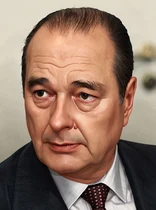 In power, 2000
Jacques Chirac
Conservatism
Rally for the Republic
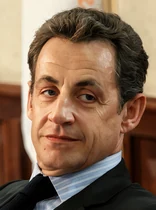
Nicolas Sarkozy
Conservatism
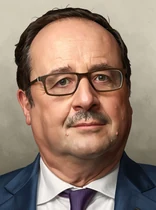
François Hollande
Social Democracy
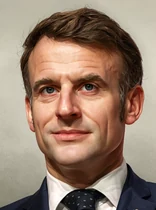
Emmanuel Macron
Centrism
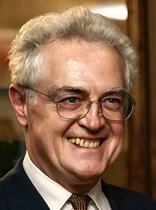
Lionel Jospin
Social Democracy

Segolene Royal
Social Democracy

Jean-Luc Melenchon
Social Democracy
Communist
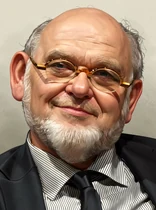
Robert Hue
Marxism
French Communist Party
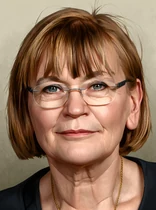
Marie-George Buffet
Marxism
Louise Varlin
Marxism
Fascist
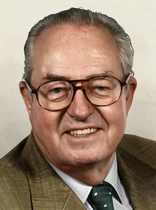
Jean-Marie Le Pen
Fascism
National Front
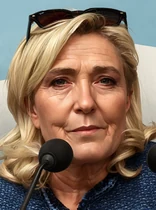
Marine Le Pen
Fascism
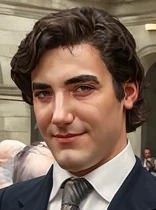
Jean-Christophe Napoleon
Fascism
Non-Aligned
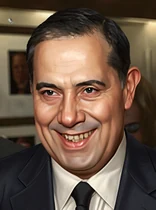
Charles Pasqua
Moderatism
Rally for France
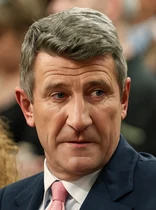
Philippe de Villiers
Moderatism
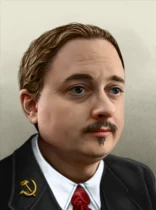
Charles Lemaigne
Absolute Monarchy
The focus tree
France's own tree has 706 focuses. It opens with The Franco-German Engine, The French Model, The Crash Comes to Paris, The Armed Forces, The Quai d'Orsay, The Republic and more. By kind: political (438), historical (368), industry (165), army xp (103). Taking every focus, one after another, would take about 49 years - the roads are exclusive, so a playthrough sees only part of it.
Drag to pan, Ctrl + scroll to zoom, click a focus for its description and rewards. Focus names in the guides below jump to it.
Loading the tree...
Path guides
How to reach each of France's roads. The same guides are in game, as free decisions in the France Path Guide category.
The Elysee and Matignon
How France's politics work: two trees side by side.
- The Elysee (, on the right): the President's domain and the five-year term, the divided right, the National Front, the Communists and Trotskyists, the Greens and Chevenement, the eleventh of September and the affairs. Matignon (on the left): Jospin's Plural Left, Corsica, the euro's joint government, insecurity, the unions, the Socialist Party and justice. No focus is tied to a date.
- needs the Elysee's lines, and the insecurity line. Choose the President's road: Chirac re-elected, , Le Pen's victory (opened by ) or the Left Front (opened by ). The first focus of each changes the government and the President; the other roads disappear.
- Matignon's Legislative Elections of 2002 follow, then 2007 and 2012: each time a majority of the right or of the left. With the President's camp it makes a concordance or a cohabitation, and each majority has a focus for either case.
Elections are called by focus, never by the calendar. With historical focuses on, the AI re-elects Chirac with a right-wing Assembly, makes Sarkozy President with Fillon at Matignon, and in 2012 elects Hollande and a left-wing Assembly.
The Executive and La Rue
France's mechanics:
The Executive, France's balance of power: the Elysee against Matignon. A concordance pulls it towards the Elysee every month, a cohabitation towards Matignon. Each road's domestic lines (the Front's national preference, the Left Front's nationalisations, Jospin's Republic, Sarkozy's opening and so on) need a concordance or the bar on the Elysee's side. Decisions push it: Address the Nation, Go to the People, Article Sixteen, Article 49.3, the Wednesday Council, Change Prime Minister. The far left end is the Hyperpresidency.
La Rue, the street, from 0 to 100: reforms (the pensions, the hours, the special regimes, the first job contract) raise it, concessions lower it, and it falls a little every month. At 75 reforms are blocked and a general strike breaks out; at 100 the government falls. Talks, the CRS or withdrawing the bill calm it.
The Franco-German Engine
The European mechanic:
One meter, Paris's lead in Europe from 0 (a German Europe) to 100, shown in the Franco-German Engine decisions; it starts at 45, a little towards Berlin, which leads the Defence Union.
Towards Paris (the farm budget, Nice, a European deterrent, a political euro): political power and influence; at the far end the Union's cohesion strains.
Towards Berlin (the stability pact, the central bank, enlargement east): industry and discipline, at a cost in political power.
In the middle, the Tandem: stability, research, and the Union's cohesion slowly rises. A road that takes France out of the Union ends the engine.
France in the World
Foreign policy:
France broke with Washington over Yugoslavia in 1993, and NATO is down to America, Britain and Canada. Mend fences or be the counterweight; keep Francafrique or break with it; sell Russia warships or stand with Kyiv; build the Union for the Mediterranean.
Algeria, Russia and Britain can turn down France's offers. A refused offer can be made again by decision.
Chirac Re-elected
The historical road:
Chirac wins the run-off of 2002 and governs five years with the new UMP (Raffarin, Villepin and Sarkozy at the Interior are Matignon's, with a right-wing Assembly): Sarkozy at the head of the party, a Europe of nations within the federal Union ( needs Paris's lead at 60), the deterrent kept national (the umbrella offered to Berlin), against Washington, the Africa cell and Chirac's causes.
needs every line. The election of 2007, called by focus: Sarkozy (historical) or Segolene Royal. Each term's end needs every line of it; then the election of 2012: Hollande (historical) or the incumbent, or Sarkozy at last against Royal.
President Jospin
The federal road:
Jospin wins the run-off of 2002 (holding the Plural Left together helps); with a left-wing Assembly Matignon gives him Aubry or Fabius and the sixth week. His own lines: the foreigners' vote, a federation of nation states put to Berlin, the Defence Union deepened, the Tobin tax, Corsica and the Greens.
needs every line; the election of 2007 is Jospin against Sarkozy. needs the engine near the middle.
may let an official in the Berlaymont listen to a painting.
The Twenty-First of April
The nationalist road:
Open it with : Le Pen's shock in the first round becomes victory in the run-off. Eight lines: the government and the sovereigntist alliance, out of Europe (a referendum, then France leaves the Union and the Defence Union, which ends the Franco-German Engine; the new franc), a hard line on immigration, law and order, economic patriotism, the armed forces, a France of nations (Moscow may refuse and be asked again), and the nation's soul.
needs every line: Marine Le Pen's National Front or Philippe de Villiers' Movement for France, then .
The Left Front
The communist road:
Open it with : Robert Hue's Left Front wins the run-off. Seven lines: the government, nationalisations, the euro (France leaves its joint government, then chooses a social Europe from within or leaving the Union, which ends the engine), closer to Moscow (Moscow may refuse and be asked again), labour, Paris and the red belt, and the armed forces.
needs every line: 's Communists or Jean-Luc Melenchon's Left Party, then the Social Republic.
Something Hidden
Some roads are hidden:
A painting in Brussels may have something to say. An imperial family may have a candidate nobody has considered. And Paris has risen before.
Inside Le Pen's road, the Bonapartists of Ajaccio may write to the President, but only a President at the Hyperpresidency can receive their Prince; inside the Left Front's, the Hotel de Ville may have visitors in the evenings, who stay only when La Rue is at 60; inside Jospin's, the painting speaks only to a Europe run from Paris (the engine at 65). Each letter comes back once when its moment comes. Each hidden road replaces the road it opens in, and sends the Assembly home. Only one can open. The AI never takes one when historical focuses are on.
Mechanics
How France's own systems work. In game: the France: Mechanic Guide decisions.
The Executive: the Elysee and Matignon
France's balance of power: the President's Elysee against the Prime Minister's Matignon, in The Executive decisions.
A concordance (President and Assembly of the same camp) pulls it towards the Elysee every month; a cohabitation towards Matignon. The far Elysee end is the Hyperpresidency.
Each road's domestic lines (the Front's national preference, the Left Front's nationalisations, Jospin's Republic, Sarkozy's opening and so on) need a concordance or the bar on the Elysee's side.
Decisions: Address the Nation, Go to the People, Article Sixteen, Article 49.3, The Wednesday Council, Change Prime Minister. Each Legislative Election (2002, 2007, 2012) brings a majority of the right or the left, and with it a concordance or a cohabitation.
La Rue
The street, from 0 to 100, shown in the La Rue decisions. Reforms (the pensions, the hours, the special regimes, the first job contract) raise it; concessions lower it, and it falls a little every month.
At 75 reforms are blocked and a general strike breaks out; at 100 the government falls.
Decisions: Open Talks With the Unions, Send in the CRS, Withdraw the Bill.
How to play it: space out the reforms, and calm the street between them.
The Franco-German Engine
Paris’s lead in Europe
A German Europe0-20
Berlin’s lead pays Germany in influence and political power; an extreme drains the Union’s cohesion.
Berlin Sets the Pace20-40
Germany drives the Union.
The Tandem40-60
Stability, research and trade; now and then it raises the Union’s cohesion.
Paris Sets the Pace60-80
France drives the Union.
A Europe From Paris80-100
Political power, influence and war support for France; an extreme drains the Union’s cohesion.
Who leads Europe: one meter, Paris's lead from 0 (a German Europe) to 100 (a Europe run from Paris). It is France's, shown in France's Franco-German Engine decisions and Germany's Leading Europe decisions. It starts at 45, a little towards Berlin, which leads the Defence Union.
The ranges: A Europe From Paris (80-100: political power, influence, war support for France), Paris Sets the Pace, the Tandem (40-60: stability, research and trade), Berlin Sets the Pace, A German Europe (0-20). Germany has a spirit that follows the same ranges: Berlin's lead pays it in influence and political power, Paris's costs it.
France pulls towards Paris with Set the Agenda in Brussels and the Empty Chair, or towards the middle with a Blaesheim Dinner; Germany pulls back with the Chancellor's Summit, Guardian of the Pact, Frankfurt Decides, Enlarge to the East, Write the Cheque and Call Paris's Bluff, or mends the Tandem. Each side can also propose a joint initiative to the other.
The Union: while France is in the Defence Union, the Tandem raises the Union's cohesion now and then and either extreme drains it. Reaching either end fires an event once. A road that takes France out of the Union ends the engine.