
The situation in 2000
Germany reunified in 1987, three years earlier than in our world, as the Eastern Bloc fell apart after Chernobyl. It sent combat troops to the Gulf - its first since 1945 - and paid in blood, then broke with Washington over Yugoslavia. Chancellor Gerhard Schröder now leads the European Defence Union founded at Cologne in 1999: an untested alliance of pacifist voters, in a Union whose cohesion is anything but certain. Win the 2002 election and turn east as the Gazprom Chancellor, or hand Berlin to Joschka Fischer and federalise the Union into a United States of Europe; elect Stoiber, then Merkel, for a Kerneuropa and an Atlantic Union with what is left of NATO. Or let the Republic fall - to Germany First, to the Left, or to a Hohenzollern Kaiser - and see what stirs beneath Berlin and in Trier.
60
17
6
82m
75%
70%
4
21
Resources
Army
23 divisions
- Armoured7
- Mechanised7
- Infantry2
- Airborne2
- Mountain1
- Garrison4
Navy
29 ships
- Destroyers3
- Frigates12
- Submarines14
Air force
350 aircraft
- Fighters150
- Strike aircraft200
One Germany, One Europe
East Germany left the Warsaw Pact in February 1987 as Chernobyl's rebellion tore the Soviet bloc apart, and on 18 August 1987 Germany reunified - three years earlier than anyone had dared hope.
In 1991 Germany sent combat troops abroad for the first time since 1945, to the Gulf, and they came home in coffins from a war Washington had promised would be easy. When America and Britain went into Yugoslavia in 1993, Bonn refused and condemned it at the UN. Germany chose Europe instead: the euro and its joint economic government in 1999, and at Cologne the European Defence Union, with Germany at its head.
Ideologies and leaders
In power on 1 January 2000: Gerhard Schröder (Social Democratic Party of Germany). Every leader below can come to power in TND, through the elections, coups and roads of its focus tree.
Democratic
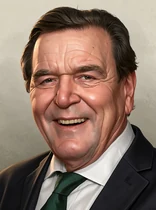 In power, 2000
Gerhard Schröder
Social Democracy
Social Democratic Party of Germany
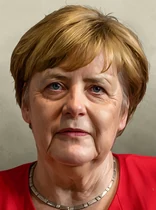
Angela Merkel
Conservatism
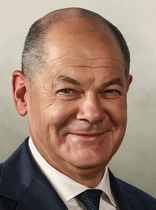
Olaf Scholz
Social Democracy
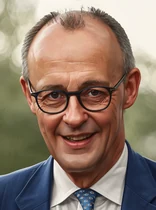
Friedrich Merz
Conservatism
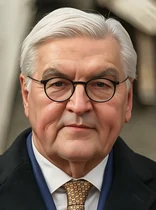
Frank-Walter Steinmeier
Social Democracy
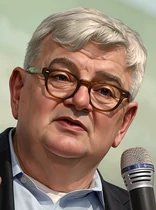
Joschka Fischer
Liberalism
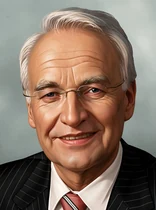
Edmund Stoiber
Conservatism
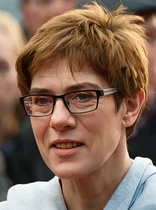
Annegret Kramp-Karrenbauer
Conservatism
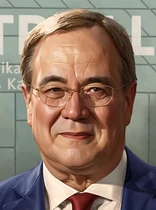
Armin Laschet
Conservatism
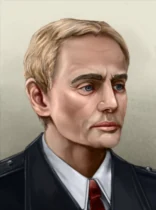
Ronald Schill
Populism
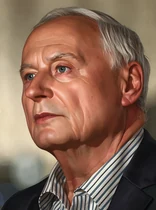
Oskar Lafontaine
Social Democracy
Communist
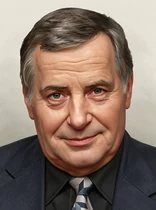
Lothar Bisky
Marxism
Party of Democratic Socialism
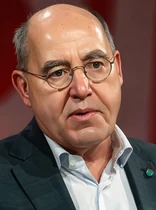
Gregor Gysi
Marxism
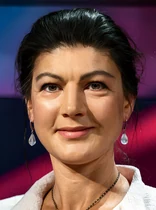
Sahra Wagenknecht
Leninism
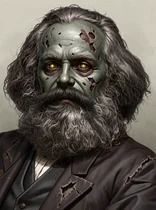
Karl Marx (Deceased)
Marxism
Fascist
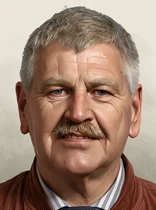
Udo Voigt
Nazism
National Democratic Party of Germany
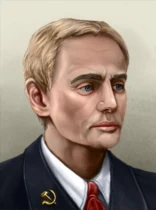
Ronald Schill
Fascism
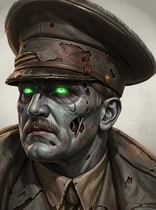
Adolf Hitler (Undead)
Nazism
Non-Aligned
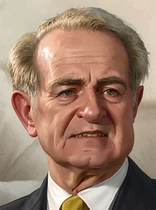
Johannes Rau
Moderatism
Federal President
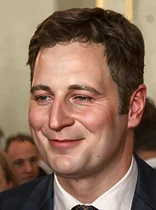
Georg Friedrich I
Absolute Monarchy
The focus tree
Germany's own tree has 700 focuses. It opens with Inner Unity, The Eastern Neighbours, A Self-Confident Nation, Citizens in Uniform, The Luftwaffe of the Union, The Deutsche Marine and more. By kind: political (333), industry (224), army xp (143), historical (94). Taking every focus, one after another, would take about 70 years - the roads are exclusive, so a playthrough sees only part of it.
Drag to pan, Ctrl + scroll to zoom, click a focus for its description and rewards. Focus names in the guides below jump to it.
Loading the tree...
Path guides
How to reach each of Germany's roads. The same guides are in game, as free decisions in the Germany Path Guide category.
The First Choice and the 2002 Election
How Germany's politics begin:
- The first political focus is a choice: (the democratic tree) or (the Republic in doubt). Taking one closes the other.
- On the Berlin Republic, play Schröder's first term, then take and . No focus is tied to a date.
- Election night is an event: Schröder's Red-Green coalition is returned, or Edmund Stoiber becomes Chancellor. There are no primaries.
- Take the winner's first focus (, or ). The loser's road disappears.
With historical focuses on, the AI elects the Union in 2002 and follows Stoiber into the Merkel years (the black zero, the nuclear exit, change through trade, Laschet after her).
Red-Green and the Coalition Crisis
Schröder's second term ends in a split:
- Work through Agenda 2010, and the rest of the Red-Green trunk to .
- The event asks who leads: Schröder holds on (the Gazprom Chancellor) or he steps aside for Joschka Fischer (the Federal Union).
- Take that road's first focus: , or .
If Oskar Lafontaine walked out of the SPD on this road, the Left remembers it if it ever governs.
The Gazprom Chancellor
Schröder turns east:
- Take .
- The Russian Connection is a spirit in tiers: every pipeline, gas contract and summit with Moscow raises it - and drains the Defence Union's cohesion.
- At the end choose: (a treaty with Russia) or (back to Europe, cohesion rises).
- Either way, hands the chancellery to Frank-Walter Steinmeier, who has a short line of his own.
The Federal Union: the United States of Europe
How to federalise the Defence Union:
- Become Chancellor as Joschka Fischer (the Coalition Crisis, then ).
- The Humboldt Plan leads to a European constitution. France and the Netherlands vote on it by event: if they refuse, choose or .
- Karlsruhe must accept it: the Court's line ends in , a new constitution for Germany itself.
- Ask France to found the federation with us. If Paris refuses, court it with political power and ask again, or go on with .
- Build and the First Union Election. In the Defence Union's own branch, reach A Union in Arms.
- needs Defence Union cohesion of at least 60, A Union in Arms done, and Fischer in office.
- : every member of the Defence Union is asked to join the federation. Those who accept are annexed, with cores. Those who decline can be courted and asked again (decisions).
A month later choose the federal capital: Brussels, Strasbourg or Berlin.
Stoiber, Merkel and the Atlantic Union
The Union road:
- Win the 2002 election as Edmund Stoiber and take .
- Any one of his lines leads to : he goes home to Munich and hands Berlin to Angela Merkel.
- Take . Kerneuropa runs the Defence Union as a led alliance, not a federation.
- The euro crisis is a choice: or Eurobonds. : leave nuclear power or keep it.
- leads to : the USA is asked to merge its alliance with ours. If it agrees, every member of both joins one alliance led by Germany. If it refuses, court Washington and ask again.
- At the end a party congress chooses her successor: Annegret Kramp-Karrenbauer or Armin Laschet.
The Republic in Doubt
How the Berlin Republic falls:
- Take as the first focus instead of .
- Work through the parties, the East and the street to .
- The event asks who fills the void: , the Left (Ostalgie) or the Crown. Take that road's first focus.
Germany First (and what lies beneath Berlin)
:
- Take : Ronald Schill governs as a law-and-order populist.
- and Dexit take Germany out of the euro, the European Union and the Defence Union (France is left leading it).
- end the Republic. Choose (Schill rules by decree) or (Udo Voigt).
- The lost lands give claims and war goals; Austria is a customs union or an ultimatum. The road ends in .
Hidden: on the NPD's road take . In the event choose 'Send someone down', then 'Wake it', and opens. It replaces .
Ostalgie (and the Ghost of Trier)
The Left in power:
- Take Ostalgie: Lothar Bisky's PDS governs.
- , and build the party of the East.
- Choose (a democratic Left leading the Union from the left, with a Social Charter offered to the other members) or (Sahra Wagenknecht, neutrality, out of the Defence Union and the EU, the German Democratic Republic).
Hidden: take . A crate arrives from Highgate Cemetery: choose 'Open it. At midnight, with a reading from Das Kapital', then 'Comrade Marx! Welcome back'. opens. It replaces the Left.
The Hohenzollern Restoration
The Crown:
- Take : President Johannes Rau governs as caretaker, without elections.
- The convention and the referendum on the crown decide whether Germany becomes a constitutional monarchy.
- crowns Georg Friedrich, Prince of Prussia, as Kaiser; the country becomes the German Empire.
- Then choose or . Abroad, Mitteleuropa offers Austria a customs union and Königsberg a return, peacefully or not.
Legacies and National Programmes
Every focus builds up a spirit, by what it is about:
A chancellor's own focuses build that leader's legacy (Legacy of Gerhard Schröder, of Joschka Fischer, of Angela Merkel and so on). It starts with their first focus and stays for good.
Every other focus builds one of four evolving spirits: , The Bundeswehr, Germany in the World and .
A railway focus adds infrastructure construction speed; a university focus adds research speed. Each focus shows what it adds.
Choices in the Shared Branches
The choices that exclude each other outside politics:
or . or the Investment Offensive.
or .
With NATO gone there is no American bomb to share: (France decides) or (Germany builds its own, at a heavy cost in opinion and Union cohesion).
Kaliningrad: bring it into Europe, or guarantee it. China: business first, or the Dalai Lama. Turkey: accession talks, or a privileged partnership.
Outside the European Union, Germany has its own way out of the 2008 crash; inside it, the shared European Recovery branch.
Mechanics
How Germany's own systems work. In game: the Germany: Mechanic Guide decisions.
Leading Europe
Berlin's side of the Franco-German Engine. The engine is France's meter, Paris's lead in Europe from 0 to 100; Germany's Leading Europe decisions pull it back towards Berlin while France's engine runs and France is not at war with us.
Germany's own spirit follows the meter's range: the further towards Berlin, the more influence and political power; a Europe led from Paris costs Germany both.
Decisions: The Chancellor's Summit, Guardian of the Pact, Frankfurt Decides, Enlarge to the East, Write the Cheque and Call Paris's Bluff push towards Berlin; Mend the Tandem pulls to the middle, where the Defence Union's cohesion grows.
How to play it: an extreme either way strains the Union's cohesion. Lead from Berlin if you can afford a quarrel with Paris; keep the Tandem if the Union itself matters more.
The Franco-German Engine
Paris’s lead in Europe
A German Europe0-20
Berlin’s lead pays Germany in influence and political power; an extreme drains the Union’s cohesion.
Berlin Sets the Pace20-40
Germany drives the Union.
The Tandem40-60
Stability, research and trade; now and then it raises the Union’s cohesion.
Paris Sets the Pace60-80
France drives the Union.
A Europe From Paris80-100
Political power, influence and war support for France; an extreme drains the Union’s cohesion.
Who leads Europe: one meter, Paris's lead from 0 (a German Europe) to 100 (a Europe run from Paris). It is France's, shown in France's Franco-German Engine decisions and Germany's Leading Europe decisions. It starts at 45, a little towards Berlin, which leads the Defence Union.
The ranges: A Europe From Paris (80-100: political power, influence, war support for France), Paris Sets the Pace, the Tandem (40-60: stability, research and trade), Berlin Sets the Pace, A German Europe (0-20). Germany has a spirit that follows the same ranges: Berlin's lead pays it in influence and political power, Paris's costs it.
France pulls towards Paris with Set the Agenda in Brussels and the Empty Chair, or towards the middle with a Blaesheim Dinner; Germany pulls back with the Chancellor's Summit, Guardian of the Pact, Frankfurt Decides, Enlarge to the East, Write the Cheque and Call Paris's Bluff, or mends the Tandem. Each side can also propose a joint initiative to the other.
The Union: while France is in the Defence Union, the Tandem raises the Union's cohesion now and then and either extreme drains it. Reaching either end fires an event once. A road that takes France out of the Union ends the engine.
Legacies and National Programmes
A chancellor's own focuses build that leader's legacy (Legacy of Gerhard Schroder, of Joschka Fischer, of Angela Merkel and so on). It starts with their first focus and stays for good.
Every other focus builds one of four evolving spirits: , The Bundeswehr, Germany in the World and . A railway focus adds infrastructure construction speed; a university focus research speed.
The Russian Connection
On Schroder's road as the Gazprom Chancellor, every pipeline, gas contract and summit with Moscow raises The Russian Connection, a spirit in tiers - cheap energy and trade with the East - and drains the Defence Union's cohesion.
At the end choose (a treaty with Russia) or (back to Europe, cohesion rises).