
The situation in 2000
China enters the new century two decades into Deng Xiaoping's market reforms, the fastest-growing major economy on earth. Under Jiang Zemin the Party keeps its monopoly on power - yet the British flag still flies over Hong Kong, never handed back, and Taiwan drifts further from reunification. With the Soviet Union long gone, Beijing is the West's only great rival. Join the WTO and become the world's factory - but the more China sells to the West, the harder it falls if it ever fights it. Press Hong Kong and Taiwan by every means short of war, lend along a new Silk Road, and at the Sixteenth Congress keep the Party together under Hu Jintao or Bo Xilai, or watch it split into a civil war for a democratic China. An emperor, a bear and the Moon are not out of the question.
97
26
10
1264m
60%
70%
4
80
Resources
Army
91 divisions
- Armoured10
- Mechanised12
- Infantry40
- Airborne3
- Marines2
- Mountain4
- Garrison20
Navy
120 ships
- Destroyers20
- Frigates40
- Submarines60
Air force
2,300 aircraft
- Fighters1,500
- Close air support500
- Strike aircraft300
The Lease That Was Not Returned
The New Territories lease ran out in 1997, and Hong Kong should have come home. It did not. With the Soviet Union gone and Britain, newly out of Europe, determined to keep its last great colony, London refused to hand it over. The Union Flag still flies over Victoria Harbour, and every Chinese government since has sworn to take it back.
Ideologies and leaders
In power on 1 January 2000: Jiang Zemin (Chinese Communist Party). Every leader below can come to power in TND, through the elections, coups and roads of its focus tree.
Democratic
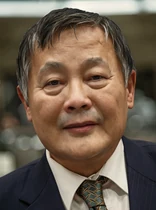
Wei Jingsheng
Liberalism
Chinese democracy movement
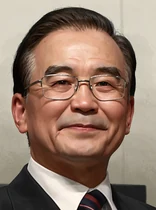
Wen Jiabao
Social Democracy
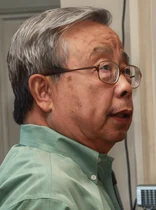
Fang Lizhi
Liberalism
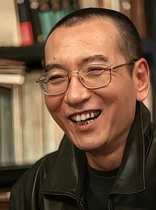
Liu Xiaobo
Liberalism
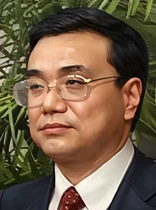
Li Keqiang
Social Democracy
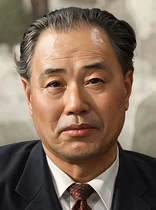
Zhao Ziyang
Social Democracy
Communist
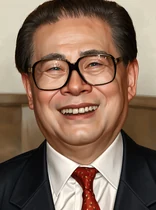 In power, 2000
Jiang Zemin
Marxism
Chinese Communist Party
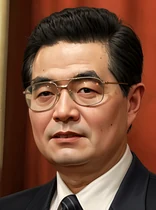
Hu Jintao
Marxism
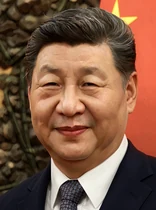
Xi Jinping
Marxism
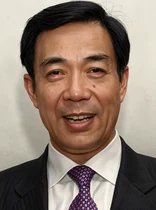
Bo Xilai
Anti-Revisionism
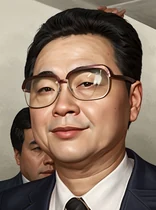
Li Peng
Leninism
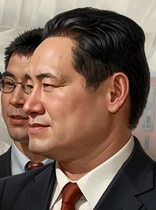
Zhou Yongkang
Stalinism
Fascist
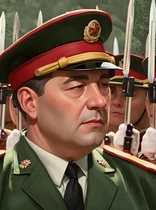
Chi Haotian
Fascism
People's Liberation Army
Non-Aligned
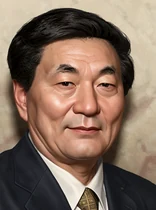
Zhu Rongji
Oligarchy
Chinese Communist Party
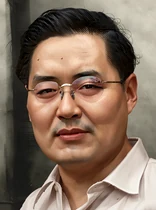
Emperor Kong Decheng
Moderatism
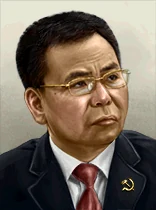
The Yongxing Emperor
Absolute Monarchy
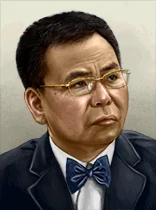
Qin Zhenhai
Junta
The focus tree
China's own tree has 878 focuses. It opens with The Dependency Debate, Reform and Opening, The Export Collapse, The New Silk Road, The Hong Kong Question, One China and more. By kind: political (515), historical (399), industry (225), army xp (138). Taking every focus, one after another, would take about 54 years - the roads are exclusive, so a playthrough sees only part of it.
Drag to pan, Ctrl + scroll to zoom, click a focus for its description and rewards. Focus names in the guides below jump to it.
Loading the tree...
Path guides
How to reach each of China's roads. The same guides are in game, as free decisions in the China Path Guide category.
The Sixteenth Congress
How China's politics begin:
- Play Jiang Zemin's last years from : the Three Represents, Falun Gong, the WTO at Doha, Zhu Rongji's reforms, the army and the succession. No focus is tied to a date.
- needs every line of Jiang's years finished.
- Then choose the road: the Party Holds (communist) or the Party Splits (democratic). The other road disappears.
With historical focuses on, the AI keeps the Party together and makes Hu Jintao General Secretary.
Western Dependency
The signature mechanic:
One bar between Decoupling and Integration, shown in the Western Dependency decisions. Integration gives factory output, research and trade; the WTO accession is the big early push.
If China is at war with the West (America, Britain, a member of the EU or NATO) or under Western sanctions, an economic shock strikes, as deep as China is integrated: a collapse at the World's Factory, nothing at Self-Reliance.
Every step towards Decoupling adds a stack of Weaning Pains, each deeper than the last (up to six); the first lasts six months, each further step adds two more, at most a year left. and the Medium and Long-Term Plan exclude each other. Sanctions come from wars on Taiwan or Hong Kong; a Grand Bargain decision lifts them.
Hong Kong, Taiwan and the Belt and Road
Soft power first:
Hong Kong is British. Raise Hong Kong's Support for Beijing to 50 and ask London for a peaceful handover; if it refuses, press and ask again, or, in a tense world, take it by force and be sanctioned.
Taiwan: carrots and sticks move Cross-Strait Relations towards Reunification. Deep enough, offer ; a war needs the bar low, a tense world, and means fighting Taiwan's guarantors.
The Belt and Road lends to countries; a port country deep in debt can be asked to lease its port. Two ports open the String of Pearls.
The Party Holds
The communist road (historical):
- : Jiang presides over the transition - collective leadership, the SARS reckoning, the Youth League against the princelings, the army and the 2004 constitution. needs every line finished.
- Then choose: Hu Jintao (historical) or Bo Xilai. The other disappears.
- Hu Jintao: Hu and Wen, the Scientific Outlook, the Harmonious Society, the Youth League's Party, the army taken from Jiang, the year of 2008, peaceful development and the fall of Bo Xilai. needs every line and makes Xi Jinping General Secretary: the tigers and the flies, the Chinese Dream, the Belt and Road deepened (it opens the Belt and Road decisions too), the army reorganised, the New Normal and Taiwan. needs every line of Xi's.
- Bo Xilai: sing red, strike black (his police chief and his wife are scandals waiting to happen), the Chongqing model, the New Left, the Party purged, the Red Bloc (North Korea, Vietnam, Laos and Cuba are invited; one that refuses can be courted and asked again) and a people's army. needs every line.
- The armed forces, the economy and the soft-power branches are shared by every road.
The Party Splits
The democratic road:
- makes Wen Jiabao's Democratic Front the government. The laid-off workers, the SARS cover-up, the reformers, the students, the hardliners and the world: needs every line finished.
- : the hardliners break away in the north as People's China under Li Peng; we fight from Shanghai as the Chinese Republic. Ask Britain (its price: our claim on Hong Kong), Taiwan (its price: our claim on Taiwan, which closes the union) and America (an open economy). A refusal opens decisions to court them and ask again.
- needs every line of the war finished and the Committee defeated. Then the trials, the truth about 1989 and the Constituent Assembly.
- The Assembly chooses: the Federal Republic (Fang Lizhi; offer Taiwan a union, or make friends with it; a two-way presidential election) or the constitutional monarchy (Kong Decheng, the heir of Confucius, on the throne; a two-way Diet election).
Something Hidden
Some roads are hidden:
There are those in Zhongnanhai who think a Chairman should never have to retire, and those who think the five-year plans aim too low. In the old Forbidden City, someone still keeps the Mandate.
Look at what follows Xi's Term Limits and , and Bo's Second Great Leap: each asks a question, and one answer is not the obvious one. Only one hidden road can open, and it replaces the road it opened in.
Each opens from inside a normal road. The AI never takes one when historical focuses are on.
The Reformers' Congress
Li Keqiang beside Xi Jinping:
At the Eighteenth Congress (after every line of Hu's ten years) the Party chooses: Xi Jinping (historical) or Li Keqiang, who is General Secretary of the Youth League's reform road.
Li's road: the Second Reform sells down the state firms, the hukou and the pensions are reformed, the courts, the press and the county elections are loosened, the budget is published, the migrants get schools, and the army leaves the cities. needs every line.
Xi's road and Li's exclude each other: the first to be chosen hides the other.
The Security State
after Bo Xilai:
At the end of Bo's road (every line finished) the succession splits: Bo for life (the Red Republic, as now) or 's security state.
Zhou's road: the Golden Shield and the cameras, the Political-Legal Committee and the detention law, the oil money and the monopolies, the purge of the Reds, the security partnerships with Central Asia and Moscow, the dossiers on every cadre and the stability budget. needs every line.
The Negotiated Transition
Zhao Ziyang beside the civil war:
After the Second Tiananmen the Party chooses how the crisis ends: the Civil War (as now), a negotiated transition, or the PLA taking Beijing (the junta, below). The three are alternatives, and the first to be chosen hides the others.
Zhao's road: Zhao Ziyang takes the chair of a Party that shares power at a round table. The students and the workers sit at it; a consultative council, the minor parties and non-party ministers join the Politburo; the prices are reformed again; the army goes back to the barracks; the West welcomes it, and Taipei talks. needs every line.
The PLA Takes Beijing
A road not won by votes:
After the Second Tiananmen the Central Military Commission can take Beijing itself: the Democratic Front's ministers are arrested in their beds, and the state of emergency begins. It is visible from the start of the crisis, not a hidden road.
The junta's lines: the curfew and the night arrests, the army's own Council, the economy under requisition and rationing, the loyalty campaign and the informers, and the sanctions and the Russian partnership. (an event) lets the generals choose: the Council for life, or a managed return to the parties in five years. The Council's Last Plan needs every line.
Mechanics
How China's own systems work. In game: the China: Mechanic Guide decisions.
Western Dependency
A bar between Decoupling and Integration, in the Western Dependency decisions. Its ranges: Self-Reliance, Dual Circulation, (the start), the Workshop of Asia and the World's Factory.
Integration gives factory output, research and trade; the WTO accession is worth 20 points.
The risk: while China is at war with the West (America, Britain, a member of the EU or NATO) or under Western sanctions, a shock strikes every month, as deep as China is integrated: -30% factory output at the World's Factory, -15% at the Workshop, -6% at , nothing on the Decoupling side.
Every move towards Decoupling adds Weaning Pains for a while. Decisions: Court the Multinationals and Buy American Treasuries (towards Integration); Indigenous Innovation, Rare Earth Quotas and The Domestic Market (towards Decoupling); A Grand Bargain With the West lifts the sanctions.
How to play it: integrate to grow; decouple before you go to war with the West, not after.
The Hong Kong Question
In this world Britain never handed Hong Kong back. Hong Kong's Support for Beijing (0-100) is raised by focuses and by United Front Work and Contracts for Hong Kong Firms.
At 50, ask London for a peaceful handover. If Britain refuses, press and Ask London Again - or, in a tense world, take it by force at the price of Western sanctions (see Western Dependency).
A democratic China that bought British help in its civil war gives up the claim, and the branch closes.
The Belt and Road
opens decisions aimed at other countries. A Loan for a country builds its roads, wins its goodwill and leaves it a debt.
Call In the Debt of a port country (Gwadar, Hambantota, Kyaukphyu, Djibouti, Piraeus, Mombasa, Chittagong, Kuantan, Ream): it leases the port to China - military access and a pearl - or refuses, and can be courted and asked again. Two ports open the String of Pearls.
Cross-Strait Relations
One bar on Taiwan between Reunification and Separation, shown in Taiwan's Cross-Strait Relations decisions; China's focuses and decisions move the same bar. It starts just right of centre.
The five ranges: the Annexation Crisis, Under Pressure, the Status Quo, Two Systems Apart and De Facto Independence.
Towards Reunification: talks, trade, cultural exchanges and courting the Taishang (Taiwan's businessmen on the mainland). Towards Separation: Taiwanisation, exposing the united front, referendums and a declared republic.
What it does: in the Annexation Crisis Beijing's pressure arrives as events; at De Facto Independence the world takes note, and Beijing's patience ends. China can offer once the bar is deep enough towards Reunification; a war needs the bar low and a tense world, and means fighting Taiwan's guarantors, Britain and America.
A democratic China may ask Taiwan for help in its civil war (the price: dropping its claim on Taiwan) or offer union by agreement.