
The situation in 2000
India enters the new century as a declared nuclear power after the 1998 tests. Prime Minister Atal Bihari Vajpayee leads the BJP's National Democratic Alliance after the 1999 Kargil War with Pakistan, while economic liberalisation and a booming software industry transform the country. Indo-Pakistani tension starts on the brink, and the 2004 election chooses the road: the Congress upset under Manmohan Singh, India Shining returned, the Sangh's hard line under Modi, or a Third Front of the Left and the regions.
52
17
3
1012m
60%
10%
4
35
Resources
Army
45 divisions
- Armoured3
- Mechanised4
- Infantry18
- Airborne1
- Marines1
- Mountain10
- Garrison8
Navy
37 ships
- Carriers1
- Destroyers8
- Frigates12
- Submarines16
Air force
750 aircraft
- Fighters500
- Close air support100
- Strike aircraft150
Ideologies and leaders
In power on 1 January 2000: Atal Bihari Vajpayee (Bharatiya Janata Party). Every leader below can come to power in TND, through the elections, coups and roads of its focus tree.
Democratic
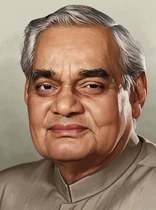 In power, 2000
Atal Bihari Vajpayee
Conservatism
Bharatiya Janata Party
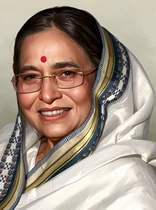
Pratibha Patil
Liberalism
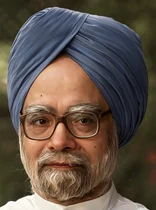
Manmohan Singh
Liberalism
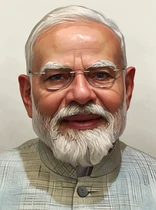
Narendra Modi
Conservatism
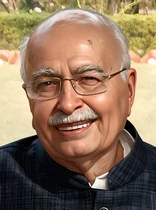
L. K. Advani
Conservatism
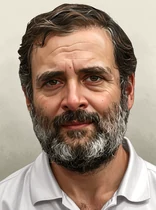
Rahul Gandhi
Liberalism
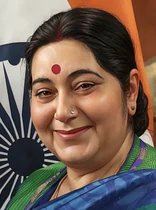
Sushma Swaraj
Conservatism
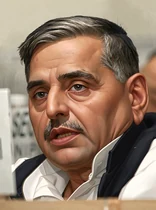
Mulayam Singh Yadav
Social Democracy
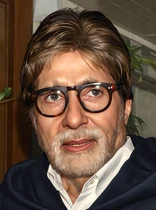
Amitabh Bachchan
Populism
Communist
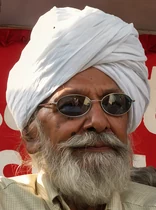
Harkishan Singh Surjeet
Marxist-Leninist
CPI (Marxist)
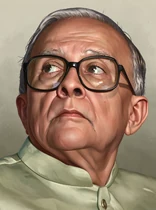
Jyoti Basu
Marxism
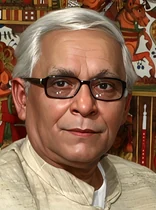
Buddhadeb Bhattacharjee
Marxism
Fascist
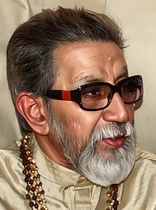
Bal Thackeray
Fascism
Shiv Sena
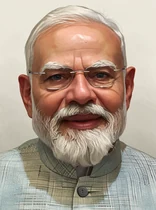
Narendra Modi
Fascism
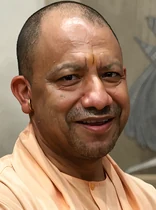
Yogi Adityanath
Fascism
Non-Aligned
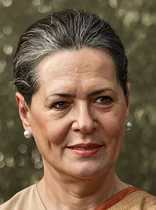
Sonia Gandhi
Centrism
Indian National Congress
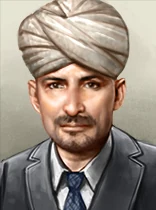
Mirza Zafar Bakht
Absolute Monarchy
The focus tree
India's own tree has 800 focuses. It opens with After Kargil, The Second-Generation Reforms, The Union of States, The East and the South, The Lehman Shock, The Armed Forces and more. By kind: political (478), historical (323), industry (184), army xp (138). Taking every focus, one after another, would take about 55 years - the roads are exclusive, so a playthrough sees only part of it.
Drag to pan, Ctrl + scroll to zoom, click a focus for its description and rewards. Focus names in the guides below jump to it.
Loading the tree...
Path guides
How to reach each of India's roads. The same guides are in game, as free decisions in the India Path Guide category.
The Verdict of 2004
How India's politics begin:
- Play Vajpayee's years from : Kargil's shadow, the Kandahar hijack, the Ramzan ceasefire and Agra, the Parliament attack and , Godhra and Gujarat, the coalition, the Sangh, the opposition, the President and . No focus is tied to a date.
- needs every line of these years finished.
- The road is not chosen, it is counted: the Lok Sabha's 543 seats (the Lok Sabha decisions) decide. A Third Front with the numbers governs; else Congress and its allies (the UPA) if they can count to 272; else the NDA is returned if it has a majority or the BJP holds 150 seats; else the Sangh takes a beaten BJP for the hard line. Seats are won in the states (the Union of States) and moved by these years' focuses.
Elections are called by focus, never by the calendar. With historical focuses on, the AI takes the Congress road and makes Manmohan Singh Prime Minister.
Indo-Pakistani Tension
The signature mechanic:
One bar between Rapprochement and Brinkmanship, shown in the Indo-Pakistani Tension decisions; it starts right of centre, after Kargil and the tests.
Towards Rapprochement (the Ceasefire of 2003, the Composite Dialogue, cricket, the buses and trade): stability, trade and a lighter army burden. needs the bar at 20 or less.
Towards Brinkmanship (the fence, hot pursuit, the strike corps, the nuclear signal): war support and army attack, at a cost in stability and consumer goods. At the Nuclear Brink crises come by themselves; at 85 or more, and with world tension above 10%, a war with Pakistan can be planned.
Pakistan answers India's offers itself. A refused offer can be made again by decision.
India in the World
Foreign policy:
With NATO down to America, Britain and Canada, Washington wants partners in Asia, not members: a strategic partnership brings technology and arms. Russia sells the fighters and the carrier, China contests the border and the ocean, a rearmed Japan is a natural friend, and the neighbours watch.
The UN seat bid needs friends on every continent.
The Congress Upset
The historical road:
- Congress wins the most seats, Sonia Gandhi declines the premiership and Manmohan Singh, the economist of 1991, becomes Prime Minister of the United Progressive Alliance, with the Left's support from outside.
- The first term: the employment guarantee, the Left's vetoes, Chidambaram's nine per cent, the nuclear deal with America (the Left walks out, the trust vote), the bombs and Mumbai in November 2008 (restraint or the surgical option). Every line must be finished.
- The election of 2009, called by focus and decided by the count: the UPA returns (the scams, Anna Hazare, the rights laws, the taper tantrum) if it has the numbers, or Advani governs.
- The election of 2014, decided by the count: the Modi wave if the NDA is the largest front, else Rahul Gandhi. Each term's end, and the election after it, needs every line of the term. The scams cost Congress seats.
India Shining
The BJP returned:
- Vajpayee wins the election of 2004 and governs a fourth time: the sell-offs, the river link, the allies' prices, the Sangh's demands, the Chief of Defence Staff, the party's film stars, and a choice on Pakistan: the peace that Agra missed, or the hard line.
- When every line is finished the poet retires and the party chooses Advani or Sushma Swaraj.
- The election of 2009, decided by the count: the NDA returned if it is the largest front, or the UPA wins and the BJP goes into opposition. Either way ends in .
may let a superstar ask for more than a seat.
The Sangh's Hard Line
The nationalist road:
- Open it if the hard line won at the Goa Executive, or roused the Sangh: the RSS takes the BJP and Narendra Modi becomes Prime Minister in 2004 (if cost him Gujarat, the moderates sulk).
- Eight lines: the Sangh in power (the temple, , the civil code), the Gujarat model, the strongman government (rule by ordinance or the mandate), , the hard line on Pakistan, the armed forces, society ( or the majority rules) and India in the world.
- , a war on Pakistan, needs the bar at 85 or more and a tense world. The bar runs far to the right.
- , when every line is finished, decided by the count: Modi's second term (demonetisation, , Kashmir made whole) if the NDA is the largest front, or Yogi Adityanath's monk government if it is not, or if the BJP holds 150 seats alone. Either leads to .
The Third Front
The coalition of the Left and the regions:
- Open it with the Third Front's Remnants: the Left Front and the regional parties govern, and this time the Marxists let Jyoti Basu be Prime Minister.
- Eight lines: the coalition, land to the tiller (), the public sector, non-alignment revived (the peace pipeline with Pakistan), Beijing or Moscow (Panchsheel or the Moscow Treaty), Bengal and Kolkata, society and the red corridor. The bar runs towards Rapprochement.
- The election of 2009, when every line is finished: Buddhadeb Bhattacharjee's government if the Left holds at least as many seats as the Samajwadis, else Mulayam Singh Yadav's. Either leads to .
The Union of States
Coalition dharma, state by state:
The Lok Sabha has 543 seats and a government needs 272. The BJP and Congress cannot win them alone: every government is built from regional parties, shown with their seats, their alliance and their goodwill in the Lok Sabha decisions.
has a branch for each state that decides Delhi: Uttar Pradesh, Bihar, West Bengal, Tamil Nadu, Gujarat, Punjab, Kashmir and the North-East. In each, back one party over its rival (it joins the government's alliance, the rival leaves), hold the state's election (the backed party takes seats) and bring its members to Delhi.
Court a party or bring it into the government by decision. A partner with little goodwill makes demands, and below 20 walks out; a government short of 272 faces motions of no confidence. At every general election the governing front's party loses seats to anti-incumbency.
Something Hidden
Some roads are hidden:
A star may be a better politician than the politicians. And an old throne may have an heir nobody has thought to look for.
Each opens from inside one of the roads, and replaces it. Only one hidden road can open. The AI never takes one when historical focuses are on.
Mechanics
How India's own systems work. In game: the India: Mechanic Guide decisions.
The Lok Sabha and the Union of States
The Lok Sabha has 543 seats and a government needs 272. Neither the BJP nor Congress wins them alone: every government is built from regional parties, shown with their seats, alliance and goodwill in The Lok Sabha decisions.
Court a party, or bring it into the government, by decision. A partner with little goodwill makes demands, and below 20 walks out; a government short of 272 faces motions of no confidence. At every general election the governing front's party loses seats to anti-incumbency.
has a branch for each state that decides Delhi: Uttar Pradesh, Bihar, West Bengal, Tamil Nadu, Gujarat, Punjab, Kashmir and the North-East. In each, back one party over its rival, hold the state's election and bring its members to Delhi.
is counted, not chosen: a Third Front with the numbers; else the UPA if it counts to 272; else the NDA with a majority or 150 BJP seats; else the Sangh takes a beaten BJP.
Indo-Pakistani Tension
A bar between Rapprochement and Brinkmanship, in the Indo-Pakistani Tension decisions; it starts at 65 of 100, after Kargil and the tests. The ranges: The Peace Process, Bus Diplomacy, The Line of Control, and The Nuclear Brink.
Towards Rapprochement: stability, trade and a lighter army burden; needs the bar at 20 or less. Towards Brinkmanship: war support and army attack, at a cost in stability and consumer goods; at the Nuclear Brink crises come by themselves.
Decisions: Open a Back Channel (Pakistan answers), Cricket Diplomacy, Call the Hotline; Mobilise on the Border, Test a Missile; and at 85 or more, with world tension above 10%, Plan the War With Pakistan (the AI only in a very tense world). A refused offer to Islamabad can be made again.